There is often a quiet moment before anyone books a whitening appointment. It may happen under bright bathroom lights, in the reflection of a car mirror, or in a photo that feels less forgiving than memory. Teeth that once looked lighter can gradually take on yellow, gray, or brown tones, and that change can feel more personal than expected.
At Smile312, our Chicago dental team is dedicated to providing exceptional care for every smile. From routine checkups to advanced treatments, we combine expertise, compassion, and modern technology to keep your teeth healthy and your experience stress-free. Discover dentistry that puts your comfort and wellness first.
That is usually where the real question begins: not whether whitening exists, but what to expect from teeth whitening in practical, medically grounded terms. Most people want to know how much lighter their teeth may get, whether the process hurts, how long the results last, and whether whitening is even appropriate for the type of discoloration they have.
For patients exploring professional whitening options, Smile 312 provides personalized cosmetic dental care in a comfortable setting. Patients in Chicago and nearby communities can meet with the dental team to discuss staining concerns, whitening goals, and which treatment approach may best fit their smile.
Teeth whitening usually works through peroxide-based bleaching agents that break apart stain molecules inside the enamel and dentin through oxidation reactions. Enamel is the hard outer layer of the tooth, and dentin is the deeper layer underneath that naturally has a more yellow tone. As stain compounds are altered, the tooth can appear brighter and less discolored.
This process is different from a simple dental cleaning. A cleaning removes plaque, tartar, and some surface stain. Whitening can change the color of the tooth structure itself, which is why it often creates a more noticeable cosmetic change than polishing alone.
Not all discoloration behaves the same way. Yellow staining often responds better than gray teeth. Brown stains from coffee, tea, tobacco, or age-related changes may improve, but the extent varies. Internal discoloration from trauma, certain medications, developmental enamel defects, or old dental work may respond poorly or unevenly.
One of the most important parts of understanding what to expect from teeth whitening is knowing that results are usually gradual, not cinematic. Many patients notice improvement within days to weeks, depending on the method used and the starting shade. The change may be subtle at first, then easier to appreciate when compared with older photos or a pre-treatment shade record.
Most whitening does not create a paper-white or perfectly uniform result. Natural teeth vary in thickness, translucency, and underlying dentin color, so some unevenness can remain even after successful treatment. Teeth with more yellow tones often lighten more predictably than teeth with gray or bluish discoloration.
Dentists generally think in terms of improvement, not perfection. A brighter, healthier-looking smile is a realistic goal. A dramatic color shift may happen in some cases, but it should not be assumed, especially if discoloration is deep, longstanding, or related to restorations such as crowns, veneers, or tooth-colored fillings.
The setting matters. Whitening done under dental supervision is usually more controlled and better matched to the condition of the teeth and gums. Over-the-counter products may help with mild staining, but they can be less predictable, especially when trays do not fit well or strips do not contact the teeth evenly.
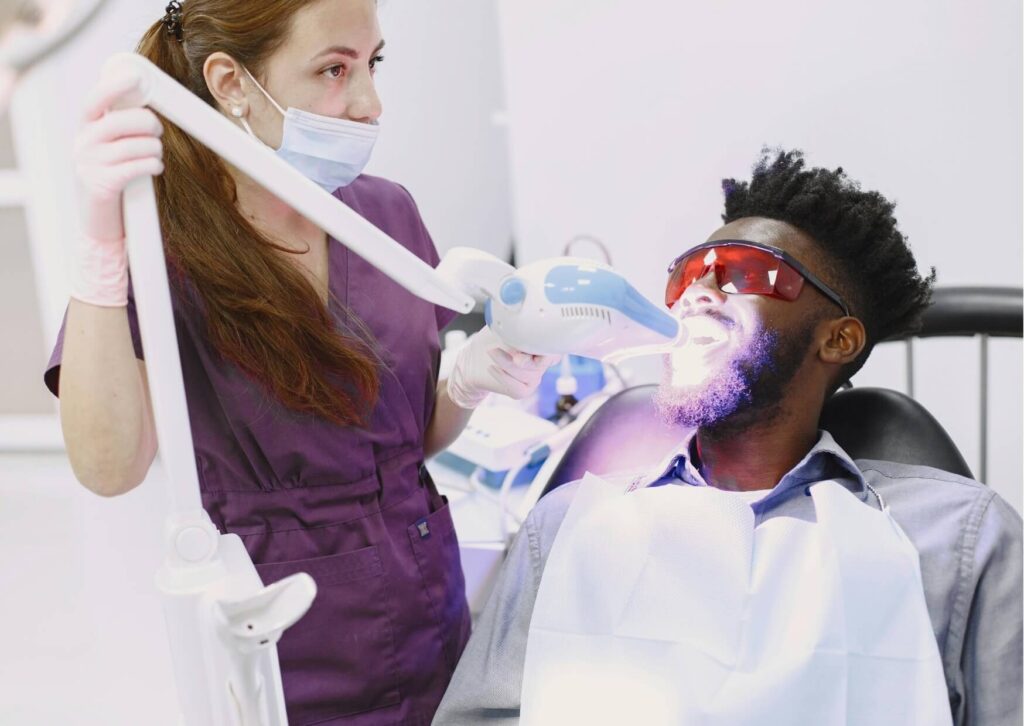
In-office whitening is performed by a dental team using higher-strength materials and protective steps for the gums and soft tissues. Results may appear faster, often after a single visit, though some patients still need follow-up or maintenance. This option can be useful when time matters, such as before a wedding, interview, or major event.
Custom trays made by a dentist allow the whitening gel to contact the teeth more evenly. This approach often produces strong results over a longer period and can be easier to adjust if sensitivity develops. For many patients, this is the most balanced option because it combines supervision with flexibility.
Whitening strips, paint-on products, and generic trays may improve mild external staining. They are generally less tailored and may be frustrating if teeth are crowded, rotated, restored, or unevenly stained. A professional evaluation is especially helpful when the cause of discoloration is not obvious.
For many patients, the part they worry about most is pain. Whitening sensitivity is common, but it is usually temporary and manageable sensitivity. It may feel like short, sharp zings with cold air, cold drinks, or brushing. This happens because whitening agents can temporarily increase fluid movement within tiny channels in the tooth, which can irritate the nerve.
Gum irritation may also occur if whitening material contacts the soft tissue. This is one reason custom-fit systems and professional supervision can matter. Poorly fitting trays or overused products may increase the chance of irritation.
Sensitivity does not always mean damage, but severe or lingering pain should not be ignored. Pain that is intense, one-sided, or persistent may point to a cavity, cracked tooth, leaking filling, or gum recession rather than routine whitening sensitivity. If symptoms feel disproportionate or continue after treatment stops, a dental exam is the safer next step. Read more about tooth sensitivity concerns.
Some teeth resist whitening for reasons that are structural, not superficial. Fillings, crowns, veneers, and bonding do not whiten the same way natural enamel does. If the front teeth contain visible restorations, the surrounding tooth may lighten while the restoration stays the same shade, creating a mismatch.
Discoloration after trauma can also be difficult. A tooth that has darkened after an injury may have changes inside the pulp, the soft tissue at the center of the tooth. In that situation, whitening may not be the first or best treatment, and the tooth may need a diagnostic evaluation before any cosmetic plan is made.
Fluorosis, enamel hypoplasia, and tetracycline-related staining can produce patterns that bleach unevenly or only partially. In these cases, whitening may still play a role, but sometimes the better conversation involves veneers or a broader cosmetic dentistry plan rather than repeated bleaching attempts.
For other options, explore cosmetic fixes.
A responsible whitening plan usually starts with an exam, not a product. Dentists often look for cavities, cracked teeth, exposed root surfaces, gum inflammation, defective restorations, and signs of grinding or clenching. These issues can increase sensitivity or make whitening uncomfortable and less predictable.
The source of the discoloration matters too. Surface stains from coffee or tobacco behave differently from internal discoloration caused by trauma, aging, or developmental changes. A recent cleaning may be recommended first because plaque and tartar can hide the true tooth shade. Routine cleanings & exams often precede whitening to help support a safer, more predictable result.
This step may feel less dramatic than the whitening itself, but it often determines whether the outcome is smooth or disappointing. Whitening should come after the mouth is stable, not before.

Whitening is not permanent. Teeth are constantly exposed to pigments from food, drinks, tobacco, and normal aging. Coffee, tea, red wine, curry, dark berries, and smoking can all shorten how long the result lasts. Even without those factors, some gradual darkening over time is normal.
How long the effect lasts depends on the starting stain level, the whitening method, oral hygiene, diet, and whether there is ongoing maintenance. Some patients stay happy with the result for many months. Others notice relapse sooner, especially if staining habits continue.
Maintenance does not have to mean constant treatment. It usually means periodic reassessment and, when appropriate, a dentist-guided touch-up plan that fits the condition of the teeth rather than chasing unrealistic brightness.
Most whitening is low risk when used appropriately, but it is still a dental treatment with limits. Problems can arise when products are overused, used too often, or applied to teeth that were already vulnerable. The most common issues are sensitivity and gum irritation, but not every painful reaction is routine.
Seek dental evaluation promptly if there is swelling, throbbing pain, visible gum injury, a dark single tooth, a broken tooth, or sensitivity that lingers and worsens rather than settling. These patterns may suggest decay, infection, trauma, or another condition that whitening will not fix.
Urgent care matters even more if pain interferes with sleep, facial swelling develops, or there is fever or drainage. Whitening should never be used to mask a tooth problem that needs diagnosis.
A good whitening discussion is usually less about selling brightness and more about matching expectations to biology. The useful questions are simple: What kind of staining is present? Are there restorations in visible areas? Is there a history of sensitivity? Is there enough time to reach the desired result safely?
To prepare, review consultation questions before your visit. In practice, the best outcomes often come from modest, well-planned treatment rather than aggressive bleaching. Teeth that look natural, healthy, and proportionate to the face tend to age better cosmetically than teeth pushed toward an artificial shade. That is not a dramatic answer, but it is the honest one.
If the goal is to look fresher in photos, more polished at work, or more like an earlier version of the same smile, whitening can be very effective. Learn how whitening fits into a wider smile transformation. If the goal is to erase every variation in color, shape, and translucency, whitening alone may not be enough.
If you are considering professional whitening and want realistic guidance about what to expect, our team at Smile 312 is here to help. Schedule a teeth whitening consultation by calling (312) 263-5262. Our team can review options and, when appropriate, arrange same-day care for patients coming from Oak Park or Cicero.
That depends on the method and the type of stain. Some patients notice a change after one in-office session, while others see gradual improvement over days or weeks with take-home or store-bought products.
When whitening is used appropriately and under guidance, it does not usually damage healthy enamel in a clinically significant way. Problems are more likely when products are overused or when underlying dental disease is present.
No. Crowns, veneers, fillings, and bonding do not whiten like natural teeth, so color mismatch can become more noticeable after treatment.
Mild temporary sensitivity is common. If pain is severe, localized to one tooth, or continues after stopping treatment, a dental evaluation is advisable.
Often, yes. A cleaning can remove plaque and tartar, making the true tooth shade easier to assess and helping whitening work more evenly.
Our patients’ satisfaction is our top priority. From routine checkups to advanced dental care, we make sure every smile leaves our office healthier and happier.
I’ve been a happy patient of Smile 312 for 20 years. Seeing Dr. Mahler really changed the trajectory of my oral health. Charming office, personable staff, painless procedures, and efficiently ran - Very minimum wait time, if any! I’m spoiled for sure.

Excellent service. I felt very comfortable.
We were seen promptly. The receptionist was pleasant and efficient. Dr Mahler was exceedingly personable and thorough and explained everything in detail. The office was organized and clean with very modern equipment. All aspects of the visit were first rate
Always superb.
Just had my first visit to Smile 312 in the Loop—spotless office, friendly staff, and they’ve got Netflix to keep you entertained. Went in for a cleaning and check-up; dropped about $150 after insurance, which felt fair. They broke down the costs and insurance stuff clearly. Scheduling was easy, and... read more
The staff is very friendly and helpful. The care I receive is exceptional and the interest regarding my overall health is comforting and reassuring that I am being listened to not just regarding my dental health.
Top notch, seasoned dentist who cares about his patients. Offers current methods/tech.
I had a wonderful experience at the dentist office today. Dr. Mahler is an excellent dentist. He takes his time and explains to you was he's doing while he performs his job. His staff is very professional and kind.
Flawless.
Thanks Dr. Mahler and the dental assistants for providing a professional and excellent service. Update: Dr. Mahler is the best dentist I have had after I visited some other dentists. He is very patient, professional, knowledgeable and trustworthy. He fixed my old crown and recommended another oral surgery expert Dr. Zager... read more